
The DUI Officer Can’t Hold You Down While They Jab a Needle Into Your Arm (at least not without a warrant)

Missouri v. McNeely has been decided. We can all breath a sigh of relief that the United States Supreme Court has affirmed the judgment of the Missouri Supreme Court. The case holds that in a DUI investigation, “the natural dissipation of alcohol in the bloodstream does not constitute an exigency in every case sufficient to justify conducting a blood test without a warrant.”

Translation: The DUI officer cannot hold you down while they jab a needle into your arm to take your blood by force (at least not without a warrant).

Had the ruling gone the other way, DUI officers might start routinely taking blood by force if the person refused to submit to chemical testing after being arrested for DUI. ACLU’s National Legal Director, Steven R. Shapiro, represented Mr. Tyler McNeely before the Supreme Court. He explained it this way:

We know from experience that drunk-driving laws can be strictly enforced without abandoning constitutional rights. Today’s decision appropriately recognizes what half the states have already demonstrated – that maintaining highway safety does not require sacrificing personal privacy.

The case reminds me of a video made by Justin McShane, a DUI attorney in Harrisburg, Pennsylvania. The video shows what happens during a “no refusal” weekend when the arresting officer wanted blood. This is what it looks like when the DUI officer decides to take blood by force:

This decision does nothing to prevent the officer from getting a warrant to take blood by force. Fortunately, at least in Florida, DUI officers can NOT get a warrant to take blood after a person suspected of a misdemeanor DUI refuses to submit to chemical testing. The MADD crowd will have to be satisfied with the fact that:

  • the “refusal” can be used against the person at trial; and
  • a second refusal can land the person in jail for 12 months for a separate criminal offense (in addition to the punishment for the DUI charge); and
  • all suspects face a longer administrative suspension of their driver’s license even if they are found not guilty at trial.

is a criminal defense attorney in Tampa who fights DUI cases. Read more about Florida law on “No Refusal” DUI checkpoints.

The DUI Checkpoint “Fails to Meet Constitutional Muster”

Part III – The Prosecutor’s Internal Memo Explaining Why the DUI Checkpoint “Fails to Meet Constitutional Muster.”

Through a public records request we obtained an internal memo from Assistant State Attorney, Vin Petty, to his supervisors, Bernie McCabe, Bruce Barlett, and Mike Halkitis, dated July 3, 2012, explaining why DUI charges should be dropped.

An identical memo was filed in at least two other DUI cases involving the same checkpoint. The memo highlights the problems with a DUI checkpoint conducted in Pasco County, in New Port Richey, FL, in December of 2011.

Video taken of a suspect’s performance on roadside tests recorded Florida Highway Patrol officers in the background violating the Ops Plan. You can read more about it here -

Part II – Florida Highway Patrol on DUI Checkpoints – Why Cops Shouldn’t Record Their Own Misconduct on Video

Part I – Illegal DUI Checkpoint in Pasco County, FL, Caught on Video

I cut and paste the memo below because I think it might help another DUI attorney fighting a checkpoint case involving the Florida Highway Patrol in the future. Although it was a long time coming, the prosecutor’s internal memo explains it pretty well:

TO: Bernie McCabe, Bruce Bartlett, Mike Halkitis

FROM: Vin Petty

Date: 7/3/12

Numerous issues have come to light due to a Defense Motion to Suppress. In the Defendant’s Challenge to the Checkpoint, it has become apparent that numerous issues occurred at the FHP Checkpoint in December 2011 would would render said Checkpoint Constitutionally Invalid. Key issues include:

1) Failure of the FHP Auxiliary Troopers to properly follow the Ops Plan with regard to the stoppage of vehicles in a neutral manner.

2) Failure of FHP to properly preserve the video of the “drive through” of the Checkpoint, which would have shown the Checkpoint layout, lights and signage.

3) Failure of FHP to distribute the previously approved Ops Plan and distributing an incorrect and older Draft of the Ops Plan to Checkpoint Personnel.

The key reason for this Checkpoint to fail Constitutionally is Point (1), the failure of the FHP Auxiliary Troopers to properly follow the Ops Plan and their failure to stop vehicles in a neutral fashion.

Per both the United States Supreme Court and the Florida Supreme Court, if vehicles are not stopped in a neutral fashion set by explicit guidelines, the Checkpoint is not Constitutionally valid See State v. Jones, 483 So.2d 433 (Fla. 1986); Campbell v. State, 679 So.2d 1168 (Fal. 1996).

Specifically, the Second DCA has held that if the Ops Plan allows for too much discretion or a non-neutral pattern of vehicle stoppage, the Checkpoint is not constitutionally valid. See State v. Guy, 993 So.2d 77 (Fla. 2d DCA 2008). Unfortunately, at the Checkpoint in question, despite the Ops Plan explicitly stating that only every third (3rd) vehicle was to be stopped, video evidence shows that FHP Auxiliary Troopers were not following said plan.

The video shows numerous instances in a short period of time where streams of 2-4 cars were flagged in without other vehicles passing; thus for some periods, all vehicles were stopped. Such a failure to comply is apparent throughout almost the entire video.

Points (2) and (3) are not as crucial, but they do show a continued issue with the FHP at this Checkpoint which could affect credibility of the Checkpoint in any hearing or trial on this matter.

First, although a video or photos of the Checkpoint are not Constitutionally required pursuant to case law, the Florida Supreme Court has suggested some additional factors that should be shown to validate a Checkpoint, including proper signage and lighting. See Jones, 483 So.2d 433.

The common way to show such proper signage and lighting at a Checkpoint is for a LEO to conduct a “video drive through” of the scene, recording the exact layout, signage and lighting at the Checkpoint.

The FHP was instructed by the SAO to conduct such a “video drive through” and a video was recorded; however, FHP failed to do so and allowed the video to be destroyed after thirty (30) days pursuant to FHP policy.

Finally, with regard to Point (3), the failure to provide the proper Ops Plan on the night of the Checkpoint is not fatal as the Ops Plan that was distributed did not include any ability to deviate or use a non-neutral criteria for vehicle stoppage. Unfortunately, it appears based on the video that such criteria was not even followed, thus the Checkpoint fails to meet Constitutional muster.

APPROVE                                                                    DISAPROVE

The DMV’s Policy at DUI Formal Review Hearings – No Call, No Show, No Problem

Screen shot 2013-03-02 at 7.13.28 PM

This article discusses the absurd position taken by the DHSMV that requires the petitioner to file a “Motion to Enforce a Subpoena” under Florida Statute § 322.2615(6)(c) after a witness fails to appear for a formal review hearing to contest the administrative suspension. Read more about how Florida DUI attorneys can deal with the DHSMV’s “No Call, No Show, No Problem” policy.


When the Officer Throws that FRH Subpoena in the Trash

In the movie “Office Space” Peter Gibbons said “I think I’m just going to … not go.” Law enforcement officers throughout Florida are taking the same stance when they receive a subpoena for a formal review hearing. Many of those officers promptly throw that subpoena in the trash. In many cases, the officers and their supervisors know they can ignore the subpoena without any negative consequences.

Purpose of the Formal Review Hearing to Contest the DUI Administrative Suspension

After a DUI arrest and the accompanying administrative suspension, the driver has a right to request a formal review hearing that must be conducted within 30 days pursuant to section 322.2615, Florida Statutes (2010). Rule 15A-6.013(5) affords the driver seeking review “the right to present evidence relevant to the issues, to cross-examine opposing witnesses, to impeach any witness, and to rebut the evidence presented against the driver.” Fla. Admin. Code R. 15A-6.013(5).

Pursuant to F.S. §322.2615(6)(b), a driver whose license has been suspended may have subpoenas issued to officers and witnesses identified in documents in subsection (2) of Florida Statute 322.2615, which states, in pertinent part: “Materials submitted to the department by a law enforcement agency or correctional agency shall be considered self-authenticating and shall be in the record for consideration by the hearing officer.”

But what happens when the Law Enforcement Officer throws the subpoena in the trash?

The Good Ole Days

Prior to July of 2010, if the officer was a “no show / no call” at the formal review hearing then the hearing officer would invalidate the suspension if the attorney made the appropriate objections. The law enforcement agencies would internally discipline the officers for the transgression. As a result, it was relatively rare for an officer to just throw the subpoena in the trash without any concern about the consequences.

In July of 2010, that policy changed. Now if a law enforcement officer throws the subpoena in the trash, he doesn’t have to worry much about the consequences. In most cases, the attorney fails to file a motion to enforce the subpoena or appeal the order upholding the administration suspension.

This article explorers different strategies to deal with the problem and even use this absurd “No Call, No Show, No Problem” policy to your client’s advantage.

Holding their Feet to the Fire

What can be done if you properly subpoena a law enforcement officer and the officer decides to “no call / no show”?

1. Move to strike from the record any document authored by the absent witness (or any document that even references the absent witness’ hearsay statements) since it would be “a violation of basic principles of due process” for the hearing officer to consider that evidence but deny the driver the ability to meaningfully cross examine the individual who prepared those documents or made the statement as contemplated by the rules. See Lee v. Dep’t of Highway Safety & Motor Vehicles, 3 So. 3d 754, 757 (Fla. 1st DCA 2009) [34 Fla. L. Weekly D520a]. The hearing officer will deny that motion.

2. The attorney should then move to invalidate the suspension based on the lack of evidence needed to support the suspension (since it should be struck from the record) and explain why the rest of the record is insufficient to uphold the suspension.

3. The hearing officer will ask you whether you want to seek enforcement of the subpoena in Circuit Court or alternatively, waive any objection and go forward with the hearing as if the witness had never been placed under subpoena. When you are presented with those choices, then make a separate due process objection because the officer’s failure to appear undermines the petitioner right to have a hearing within the thirty day period for the hearing as contemplated by FAC 15A-6.013 and § 322.2615(6)(a), Fla. Stat. Also put on evidence to show the prejudice the petitioner will suffer because of the delay including the expense the petitioner must pay for additional attorney fees or costs for the court reporter. Also, point out that even if the petitioner gets an extended driving permit, the permit is for business purposes only.

File a Petition for Writ of Certiorari

One option is to reject the hearing officer’s offer for a continuance and instead file a Petition for Writ of Certiorari if the hearing officer fails to invalidate the suspension. Several courts have found that asking the petitioner to file the motion to enforce the subpoena deprived the petitioner of his due process rights because it “effectively added a procedural step to the review process that deprived Petitioner the real opportunity to be heard and to challenge the suspension on the merits within thirty days.” Pfleger v. Florida Department of Highway Safety and Motor Vehicles, 18 Fla. L. Weekly Supp. 706(a), (Fla. 6th Cir. App. Ct. May 20, 2011).

Additionally, in Robinson v. Dept of Highway Safety and Motor Vehicles, 18 Fla. L. Weekly Supp. 1099b, (Fla. 6th Cir. App. Ct. September 1, 2011), the Circuit Court also followed the Pfleger decision and held that the petitioner’s due process rights were violated by the officer’s unexcused, unexplained non-appearance at the administrative formal review hearing.

The Robinson Court quashed the hearing officer’s “Finding of Facts, Conclusion of Law and Decision” and ordered the DHSMV to reinstate the petitioner’s driving privilege and removed from his permanent driving record any entry that reflects the administrative suspension. See also Saxlehner v. Dep’t of Highway Safety and Motor Vehicles, 19 Fla. L. Weekly Supp. 67a (Fla. 11th Cir. Ct., Oct. 27, 2011).

That decision was upheld in Dept of Highway Safety and Motor Vehicles, No. 2D11–5121 (Fla. 11th Cir. Ct., June 27, 2012). The Court also noted in that decision that “…circuit courts are ruling both ways on this issue and using different reasoning for granting or denying petitions…” It certified the following question of great public importance to the supreme court pursuant to Florida Rule of Appellate Procedure 9.030(a)(2)(A)(v):

WHEN A SUSPENDEE SEEKS FORMAL REVIEW OF A DRIVER’S LICENSE SUSPENSION PURSUANT TO SECTION 322.2615(a), FLORIDA STATUTES, IS IT A VIOLATION OF DUE PROCESS TO SUSPEND THE LICENSE AFTER A SUBPOENAED WITNESS FAILS TO APPEAR AND THE SUSPENDEE CANNOT ENFORCE THE SUBPOENA WITHIN THE STATUTORILY MANDATED THIRTY–DAY PERIOD FOR FORMAL ADMINISTRATIVE REVIEW?

The downside to this approach is that while you are pursuing the Petition for Writ, your client will not get a temporarily permit and will likely suffer most of the suspension. The second downside to this approach is that your client will have to cough up the filing fee and your attorney fees to file the Writ. On the other hand, the benefit of this approach is that if your client wins the Petition for Writ, the Circuit Court may order the DHSMV to remove any mention of the administrative suspension from your client’s permanent driving record.

File the Motion to Enforce

An alternative way to deal with the problem is to take the hearing officer up on the continuance with an extended driving permit and file a motion to enforce. When you file the motion to enforce, add a demand that the absent witness pay the $400 filing fee, other costs to serve the motion, and reasonable attorney fees.

Fla. Stat. Ann. § 322.2615(6)(c) provides:

A party may seek enforcement of a subpoena under paragraph (b) by filing a petition for enforcement in the circuit court of the judicial circuit in which the person failing to comply with the subpoena resides. A failure to comply with an order of the court shall result in a finding of contempt of court. However, a person is not in contempt while a subpoena is being challenged.

Under this approach, your client will get an extended driving permit during the time it takes to enforce the subpoena. In fact, the DHSMV must issue the extended driving permit. See Carballosa v. Dept of Highway Safety and Motor Vehicles, 18 Fla. L. Weekly Supp. 569a (Fla. 4th Cir. Ct., Feb. 28, 2011).

Getting that extended driving permit can be a huge advantage, particularly when the client is suffering a 12 to 18 month hard suspension because the permit cuts into that hard suspension. In many breath test cases involving a first DUI, the period of enforcement may take up the entire six month suspension meaning that your client never suffers the 30 day “hard” suspension.

[Tip that Makes the Prosecutor's Head Spin] – A big upside to this approach is that now you get to cross examine the witness in the criminal DUI case with the fact that he had to be sued in circuit court for not showing up to the formal review hearing. The civil suit become relevant and goes to the witness’ bias and motive when he or she testifies in the criminal case. The jurors might be highly amused to learn that the officer ended up paying your client’s attorney fees for the failure to appear. Also, most law enforcement agencies will discipline the officer after the motion to enforce is filed which also becomes additional impeachment evidence that can be used at trial to show the officer’s motive and bias.

The downside to this approach is that your client will have to cough up the $400 filing fee as well as the fee for the process server to serve the motion on the absent witness, plus other costs and your attorney fees. Hopefully your client will get all that money back from the officer (or the law enforcement agency where he or she is employed) when you prevail on the motion to enforce.

Send a Letter to the “No Call / No Show” Witness

In certain cases, you may opt for the continuance to file the motion to enforce and then head back to the office to type up a letter. Fax the letter off to the absent witness and his supervisor explaining your intention to file the motion to enforce. Invite the absent witness to contact the hearing officer within two days with a written request for a continuance showing good cause.

Sending the letter increases the chance that the witness will follow through with requesting the continuance. If the witness doesn’t request the continuance, the letter is also useful in the “motion to enforce” proceeding to show the Circuit Court that the absent witness deserves to pay a heft amount of attorney fees and costs. The letter might also be admissible at trial to show the officer’s bias and motive in the event the “motion to enforce” is filed.

Either Way – Ask for a Continuance in Writing to Re-serve the Witness with Another Subpoena

As a matter of strategy, when you see that a witness is a “no call / no show” write up a quick motion to continue and hand it to the hearing officer when the hearing officer asks if you want to file a motion to enforce. Then say, “No, I’m asking for a continuance to re-serve the officer with another subpoena.”  File a written ”motion to continue” because the rules require a request for a continuance to be in writing and to show “good cause.”

Point out that this approach is cheaper since it only cost $40 to serve another subpoena verses $400 to file a motion to enforce. Also point out that this is approach is faster since the hearing could be rescheduled much faster without the need to seek enforcement in the Circuit Court (after all those Circuit Court judges are really busy handling more important matters). Also point out, that since the hearing officer is going to continue the hearing to allow you to file the motion to enforce, it makes more sense just to continue the hearing so the witness has a second chance to appear.

The DHSMV will reject that approach, but then it shows how absurd their policy is since the officer can continue for “good cause” but the Petitioner’s right to continue for “good cause” is being denied. It also shows that the DHSMVs real motivation is creating an undue hardship to frustrate the petitioner’s right to a fair hearing.

After your written request for a continuance is denied object that the denial of your request for a continuance is a violation of due process. Point out that the DHSMV’s own rules that merely require “good cause.” Then that argument can be included in either the “Writ of Cert” or the “Motion to Enforce” to show the absurdity of the DHSMV’s position.

Ask to Have the Filing Fee Waived for an Indigent Petitioner

If Petitioner is indigent, then the $400 filing fee can be waived. Section § 57.081(1), Florida Statutes provides that “Any indigent person. . .who is a party or intervenor in any judicial or administrative agency proceeding or who initiates such proceeding shall receive the services of the courts, sheriffs, and clerks, with respect to such proceedings, despite his or her present inability to pay for these services.”

The services to which the indigent person is entitled includes filing fees. § 57.081(1), Fla. Stat. “Thus, under this statute, if a person is certified as indigent, the prepayment of costs is ‘waived.’ ” Schmidt v. McDonough, 951 So. 2d 797, 800 (Fla. 2006) [32 Fla. L. Weekly S16a].

The DMV’s “No Call, No Show, No Problem” Policy

I bet the DHSMV’s “No Call, No Show, No Problem” policy would change pretty fast if a “motion to enforce” or “petition for writ of cert” was filed in every single case. I’d love to hear how other attorneys are dealing this problem.

Re: Rumor (County Prosecutor in Sumner County, KS, Figured out Intoxilyzer’s Slope Detector Doesn’t Work)

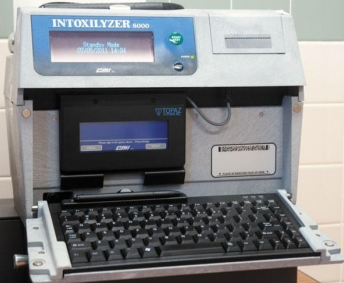
The Intoxilyzer 8000 has a real problem telling the difference between tiny amounts of alcohol in the mouth (often called “residual alcohol”) and the alcohol found in the breath from deep in the lungs. Only the latter can accurately measure how impaired a person might be. Mouth alcohol can cause a completely sober person to blow a .000 in one breath and then a few minute later show a breath alcohol concentration of .16 which is double the legal limit.

We know this because the person that maintained the Intoxilyzer 8000 instruments in Hillsborough County admitted to a problem in an “internal memo.” The internal memo explained that after swishing a tiny amount of alcohol in his mouth and then blowing in the instrument, the Intoxilyzer 8000 failed to indicate the presence of mouth alcohol. Instead, the instrument showed that the inspector has a breath alcohol concentration of double the legal limit even though he was completely sober.

Read more about Mouth Alcohol Problems on the Intoxilyzer 8000s in Hillsborough County.

These problems can be found in other states as well. Consider the e-mails from officials in Kansas. The internal e-mails showed that “rumors” were running rampant that the Intoxilyzer 8000 was unable to tell the difference between someone who was really intoxicated and someone who swished a tiny amount of alcohol in his mouth.

Apparently the county attorney in Sumner County, Kansas, sat in on a couple of demonstrations that didn’t go as planned when different Intoxilyzer 8000 machines on different dates showed a high BrAC result even though a sober person was blowing into the instrument. The head of the Kansas Alcohol Breath Testing Program was concerned that even the prosecutors were spreading rumors the instruments didn’t work. Oops.

When prosecutors know of exculpatory evidence they must turn it over to the defense. Of course, the fact that the defense was able to use that evidence meant that many cases were not able to be prosecuted. Shortly thereafter, the County Attorney, Evan Watson, announced that his office wouldn’t prosecute certain DUI cases using breath test results from the Intoxilyzer 8000.

MADD got mad. The prosecutor lost the next election in November of 2012. Kerwin L. Spencer received 2,133 votes. Evan C. Watson received only 763 votes. Kerwin Spencer decided to run for County Attorney of Sumner County, KS, for the following reason: “[d]ue to dissatisfaction with the current county attorney, I had police officers, attorneys, probation officers, and others familiar with the job contact me and urge me to run for the job.” The moral of the story is do NOT conduct any demonstration of the Intoxilyzer 8000 when an ethical prosecutor is in the room.

Special thanks to Stephen Daniels with DUI Undo Consultants, LLC, for sharing this information with me. I asked him if he was aware of any other instances of government types doing the mouth alcohol test and getting BrAC readings. It took him about two minutes to send over this funny e-mail that makes the point.

I cut and paste the e-mails below. Read the e-mails from the bottom up.

______________________________________________

Subject: RE: rumor

Date: February 24, 2011 3:57:09 PM EST

To: Robert Istas <ristas@KHP.KS.GOV>

Did you try to explain it to them or was he just trying to find ways of invalidating the instrument?

______________________________________________

From: Robert Istas [mailto:ristas@KHP.KS.GOV]
Sent: Thursday, February 24, 2011 2:56 PM
To: Christine Houston
Cc: ‘Bartkoski, Jeffrey’; ‘cmccluskey@augustadps.org’; ‘Karen Wittman’
Subject: RE: rumor

I AGREE WITH YOU.  JUST UNFORTUNATELY, IT HAPPENED WITH THE C.A. RIGHT THERE WATCHING, ETC.

______________________________________________

From: Christine Houston [CHouston@kdheks.gov]
Sent: Thursday, February 24, 2011 2:52 PM
To: Robert Istas
Cc: ‘Bartkoski, Jeffrey’; ‘cmccluskey@augustadps.org’; ‘Karen Wittman’
Subject: RE: rumor

You have to be very clear that they are to spray the breath spray just prior to blowing into the instrument otherwise it can saturate the lung and create false readings.  I have never had an instrument not give me mouth alcohol unless I did not follow the protocol.  They need to spray just prior to blowing and blow longer than when they see numbers appear on the display because the instrument has to have a certain number of points to determine the mouth alcohol spike.  That is why we wait 20 minutes and if we believe they brought up stomach contents then we restart the 20 minute deprivation period.

The attorneys down in Sumner are saying the instrument does not work.  I think it is new operators not conducting the test correctly.

______________________________________________

From: Robert Istas [mailto:ristas@KHP.KS.GOV]
Sent: Thursday, February 24, 2011 2:41 PM
To: Christine Houston; ‘Bartkoski, Jeffrey’; ‘cmccluskey@augustadps.org’
Cc: Dave Weed
Subject: RE: rumor

YES MAAM,

WHEN WE DID THE CLASS IN SUMNER COUNTY, ONE OF THE DAYS, THE COUNTY ATTY AND ASSISTANT SAT IN.  DURING THE AFTERNOON PRACTICAL, WE HAD THE COUNTY ATTY WATCHING THE DEPUTIES ACTUALLY RUN THE TEST.  WHEN IT WAS TIME FOR THE MARILYN BREATH TEST, THE INTOX ACTUALLY READ A READING OF .049.  IT DID IT TWICE THAT WEEK.  I HAVE TWO TESTS, ONE SHOWING .049 (INSTRUMENT 80-002210) AND ANOTHER SHOWING .083 (INSTRUMENT 80-002163).  THIS WAS DONE ON TWO DIFFERENT INSTRUMENTS TWO DAYS IN A ROW.

ALSO, DURING THE 02-19-2011 CLASS IN WICHITA, INSTRUMENT 80-002210 AGAIN ACCEPTED A BREATH TEST OF .025 WITH THE LISTERINE IN IT.

I STILL HAVE THE PRINTOUTS IN MY BOOK IF YOU WOULD LIKE THEM.

PLEASE HOLLER WITH ANY OTHER QUESTIONS,

ROB

______________________________________________________

From: Christine Houston [CHouston@kdheks.gov]
Sent: Thursday, February 24, 2011 10:23 AM
To: ‘Bartkoski, Jeffrey’; ‘cmccluskey@augustadps.org’; Robert Istas
Subject: rumor

Guys, was there some issue with the instruments during training?  There is a rumor in Sumner County that the instrument’s slope detector does not work and this is coming from the prosecutor’s office.  Apparently, this occurred during the class with the county attorney in there.  Can someone explain?  Thanks.

Christine Houston

Breath Alcohol Program

785-230-1727

Anthony Palese – FHP DUI Super Trooper

Why does Florida Highway Patrol Trooper Anthony Palese make so many arrests for DUI each month? And more importantly, why does the Florida Highway Patrol hand out these awards for “High DUI Trooper of the Month“?

Out of all the FHP troopers in the entire state of Florida, Trooper Anthony Palese with Troop C’s Tampa Division has made more arrests than any other trooper for 6 of the last 10 months. Either the other FHP troopers are a bunch of slackers or Anthony Palese has figured out a few short cuts.

Image

Anthony W. Palese was also the Hurd-Smith Award Winner in 2002 for 236 DUI arrests in one year. The Hurd-Smith Award is handed out at the MADD Law Enforcement Recognition ceremony each year.

Image

Past winners include Trooper Ronald Evans Jr. who received the the Hurd-Smith award in 2011 after he made 238 DUI arrests in the Land O’Lakes area of Pasco County, Florida, in 2011.

Rewarding the trooper with the highest number of DUI arrests each month might explain another trooper’s recent arrest for official misconduct when he allegedly lied in his report and under oath when testifying about a DUI arrest. Read more about why Scott Kunstmann, Florida Highway Patrol DUI Trooper, is accused of lying in a police report and was arrested recently for official misconduct.

It almost seems unfair. Give the trooper a nice award for making the highest number of DUI arrests. If he gets caught on video taking the shortcuts necessary to make the highest number of DUI arrests then charged him with official misconduct and perjury. That is what happens when the number of DUI arrests become more important than good police work. After all, FHP needs to keep those numbers up.

Port Richey DUI Checkpoints for New Year’s Eve Weekend

The approach of New Year’s Eve means law enforcement officers throughout Florida begin to ramp up plans for DUI checkpoints that begin this weekend and continue through New Year’s Eve.

The Pasco County Sheriff’s Office announced that its Selective Traffic Enforcement Program Unit will conduct a DUI Checkpoint tomorrow, Friday, December 28, 2012 at 8:30 p.m. The DUI Checkpoint in Pasco County will take place at on Congress Street just south of Ridge Road in Port Richey, Florida.

DUI Checkpoints are the least effective way to find individuals who are driving under the influence. Dozens of officers sit at one location for 6 – 8 hours at a time. These officers are suppose to randomly select vehicles. Innocent people are unnecessarily delayed. Even if the officers manage to arrest someone for DUI, those cases are often the most scrutinized types of DUI cases because the defense attorney can contest the legality of the entire roadblock.

Click here to read more about an illegal DUI Checkpoint in Pasco County where officers in New Port Richey blatantly violated the operation plan. Instead of pulling over every third vehicle as required in the pre-determined operational plan, the officers inadvertently videotaped their misconduct.

On the video you can see the officers pulling over several cars at a time and utterly ignoring the requirements of the operational plan. Not only was our client’s case dropped right before a hearing on the motion to suppress but numerous other cases were also dropped after the illegality came to light.

We hope everyone has a happy New Year’s Eve and safe 2013.

New Years 2013

Pinellas County DUI “Wolf Pack Patrols”

Pinellas County DUI Checkpoint Roadblock
Sergeant Howard Skaggs of the Patrol Operations Bureau for the Pinellas County Sheriff’s Office just issued a press release on recent “Wolf Pack patrols” in Pinellas County. The most recent roving patrol occurred on December 21, 2012 at 9:00 p.m. through December 22, 2012 at 5:00 a.m.

What is a Wolf Pack Patrol?

The “Wolf Pack patrol” is when officers with the Pinellas County Sheriff’s Office saturate a particular area with the intention of stopping as many vehicles as possible. The usual official reason for the stop is some minor traffic or equipment violation. Officers in Pinellas County have great discretion in selecting the neighborhoods to target and in selecting the individuals to be stopped during the roving patrols.

What was the result of the most recent “Wolf Pack patrol”?

The most recent “Wolf Pack patrol” netted nine (9) DUI arrests, eight (8) arrests were for misdemeanor DUI crimes and one (1) arrest was for a felony version of DUI. The DUI enforcement officers also made three arrests for driving while license suspended or revoked with knowledge (DWLSR), one arrest for resisting an officer without violence. A total of 17 citations were issued and 14 warnings for various traffic infractions.

The stated purpose of the Wolf Pack operations is to reduce DUI related injuries in Pinellas County and educate the public about the dangers of drinking and driving.

What is the difference between DUI Checkpoints and Wolf Pack Operations?

The Wolf Pack patrols in Pinellas County are held once a month. Those patrols are completely separate from the DUI roadblocks that take place once a month in Pinellas County, FL. A roadblock (often called a “checkpoint” by law enforcement) is when officers set up signs and cones on a particular road for the purpose of stopping vehicles without any cause for the stop.

In order to comply with the courts’ interpretation of the Fourth Amendment, officers must follow an operation plan and select vehicles for further detention in some random and pre-determined way such as stopping every third vehicle. Those vehicles that are selected are then forced off the roadway into a staging area where officers question the occupants of the vehicles.

Many law enforcement agencies in Florida favor Wolf Pack-type patrols because they avoid much of the constitutional scrutiny that accompanies roadblock or checkpoint stops. Also, the roving patrols generally result in more people being arrested for DUI. Roadblocks or checkpoints generally result in far fewer DUI arrests.

Leslie Sammis is a criminal defense attorney who fights DUI cases throughout the Tampa Bay area, including DUI cases in Pinellas County

DUI Checkpoint Tonight in Plant City, FL

DUI Checkpoint in Plant City, FL

The laws surrounding DUI checkpoints and roadblocks are strange. For instance, law enforcement officers are required to announce certain details about the DUI checkpoint in advance to the public.

In order to comply with this requirement, the Hillsborough County Sheriff’s Office has announced that it will conduct a “lowman checkpoint and saturation” in the eastern part of Hillsborough County. This part of Plant City is part of HCSO’s District II area. At the roadblock, all cars will pass through a set of cones with officers standing on either side of the road. The areas must be designed as a roadblock with a sign that says “Checkpoint.” The officers are suppose to select vehicles randomly in a manner that is pre-determined and spelled out in a set of written guidelines.

What Happens in a DUI Checkpoint in Plant City?

Of those vehicles passing through the first part of the roadblock, the officer will randomly select vehicles to be stopped near 902 N. Alexander Street in Plant City, FL tonight. The checkpoint will last from Thursday, December 13, 2012 from 10 p.m. until 3:00 a.m. the next morning. The guidelines usually require every second or every third car to be stopped for further detention in a second staging area that is off the roadway.

The checkpoints are not a particular effective way of finding drunk drivers although the officers do issue a lot of civil infractions for things like not wearing a seat belt, expired tag, or driving on a suspended driver’s license. Searches of vehicles can result in charges of possession of marijuana. Anyone stopped in a checkpoint and charged with any criminal offense should contact an experienced criminal defense attorney.

Motions to Suppress Evidence Obtained During a Sobriety Checkpoint

Checkpoint cases are the most scrutinized type of case and any mistake in conducting the roadblock could result in it being declared unconstitutional. If the proper motions are filled, the courts are required to exclude or suppress any evidence obtained by law enforcement if the checkpoint is declared unconstitutional. This means that the charges will be dismissed in those cases.

Thursday, Dec 13, 2012 Lowman Checkpoint & Saturation 2200 hrs. to 0300 hrs. District II – Eastern Hillsborough Co. 902 Alexander Street – NO BAT OR TRANSPORT

Operation 3D

In Hillsborough Couny, Florida, a DUI Task Force has been created called “Operation 3D.” The task force includes law enforcement officers from several agencies including the Plant City Police Department, Tampa Police Department (TPD), Hillsborough County Sheriff’s Office (HCSO), Florida Highway Patrol, and the University of South Florida (USF) Police Department. This “Operation 3D” DUI Task for will conduct these checkpoints several times a month at locations throughout Hillsborough County, FL.

Click here to see the Hillsborough County DUI Task Force’s list of locations and dates for scheduled roadblocks - DUI checkpoints locations in Hillsborough County. Read more about how we fight DUI checkpoint cases in Plant City, Hillsborough County, FL.

DUI Prosecutions in Plant City, FL

For any DUI or other misdemeanor arrest made in the eastern part of Hillsborough County, those cases are funneled into the Plant City Courthouse. One judge, the Honorable Art McNeil, County Court Judge, Hillsborough County, FL, is currently assigned all misdemeanor cases for arrests that occurred in the eastern part of Hillsborough County.

The Problem with Mouth Alcohol and Florida’s Intoxilyzer 8000

Why is Edward Owens, the former Agency Inspector for the Hillsborough County Sheriff’s Office, blowing twice the legal limit during his inspection of the Intoxilyzer 8000? Either he was intoxicated when doing the inspection, or the instrument can’t detect the presence of a tiny amount of mouth alcohol. How many other sober people blow into the Intoxilyzer 8000 when they are sober only to see a reading of twice the legal limit?

The biggest problem with the Intoxilyzer 8000 is that the instrument cannot tell the different between mouth alcohol and alcohol found in the deep lungs. The instrument is designed to assume that the any alcohol found in the sample came from breath in the deep lungs and not merely trace amounts of residual alcohol found in the subject’s mouth, throat or stomach. Any residual mouth alcohol can cause an inflated BrAC reading that causes a sober person to blow over the legal limit.

How Does the Mouth Alcohol Test Work on the Intoxilyzer 8000?

Agency Inspection Procedures – Intoxilyzer 8000 FDLE / ATP Form 39, Rev. August 2005, sets out the procedures an Agency Inspector must follow when conducting an Agency Inspection of an evidentiary breath test instrument. Contained within the Agency Inspection Procedures – Intoxilyzer 8000 FDLE / ATP Form 39, Rev. August 2005, there is an Alcohol Free Subject / Mouth Alcohol Test.

The procedure for the Mouth Alcohol Test specifically state: “Rinse mouth with alcohol salutation. When PROVIDE SAMPLE NOW is again displayed introduce a breath sample into instrument. The result must be SLOPE NOT MET.” The rules do not specify how much alcohol solution should be used.

The Mouth Alcohol Test on the Intoxilyzer 8000

To illustrate this problem consider an “internal memo” sent last year from the Agency Inspector for the Central Breath Testing Center at the Hillsborough County Sheriff’s Office. The agency inspector is a civilian employed by the Hillsborough County Sheriff’s Office to perform a monthly inspection of the instrument. Part of the test requires the agency inspector to swish a small amount of alcohol in his mouth and then blow in the instrument.

That little notation “AF / MA” means “I blew twice the legal limit!”

The Intoxilyzer 8000 is suppose to read “slope not met” or “slope not level” to demonstrate that the instrument has found the presence of “mouth alcohol” during the mouth alcohol test. When the instrument fails this test, the Intoxilyzer 8000 will put a notation of “AF / MA” which stands for “Alcohol Free / Mouth Alcohol.” Because the instrument only has to pass 50% of the time, the agency inspector is then given the opportunity to redo the mouth alcohol test.

The memo reads: “On August 11, 2011 at 20:22 hours, I obtain a .165 reading on a mouth alcohol test due to an insufficient alcohol sample being used. I repeated the test as required using a larger mouth alcohol sample and obtained the proper reading of “Slope Not Met.” The instrument then passed the mouth alcohol test and the rest of the inspection.”

Why Use an Internal Memo?

Let me first say that Edward Owens should be praised for actually putting the truth in writing even if he put it in an internal memo instead of on the actual report itself. Obviously, FDLE has designed the report to not show when an inspector blows over the legal limit. The “AF /MA” code could mean any number of things, and the inspector just has to come up with any excuse if asked about the problem by a criminal defense attorney.

Our office first obtained the internal memo through a subpoena duces tecum served on Mr. Owens for a Formal Review Hearing to contest our client’s administrative suspension after a DUI arrest. Eventually, the internal memo was sent to FDLE, initial by Laura Barfield at FDLE, and uploaded on the FDLE website as a public record.

Amazingly, the same thing happened again on the same instrument #80-003388 on April 10, 2012 when the agency inspector noted on the inspection report: “AF/MA RETRY INSF SAMPLE.”

Shortly thereafter, Mr. Owens was demoted from agency inspector to breath test operator. One of the other witnesses to this disturbing phenomenon, Charnelle Harrigan, Breath Test Operator in Hillsborough County Sheriff’s Office left her position as a breath test operator and moved out of state in May of 2012.

The Official “Excuse” Makes No Sense

FDLE/ATP Form 39 step #5 says in part “…If a test must be repeated, the REASON must be entered when prompted and recorded in the Remarks section of FDLE/ATP form 40 Agency Inspection Report- Intoxilyzer 8000. But the excuses used to explain this particular problem make absolutely no sense. The inspectors are trained to write the “used too little alcohol.” If this grossly inaccurate reading happened to the inspector what would stop the same thing from happening to an innocent person arrested for DUI?

Looking at the breath test reading, it only shows “AF / MA” without any indication that the inspector blew over the legal limit. Without seeing this “internal memo” no one would ever know how bad the problem really was. No one would ever know, except we do know now.

Mouth Alcohol Test Fails on Intoxilyzer 8000

This is not the first time the Intoxilyzer 8000 has utterly failed the mouth alcohol test. In fact, the problem was so bad that former Departmental Inspector Donald Suereth wrote this e-mail in frustration on March 19, 2008:

Ladies and Gentlemen, I have just reviewed the agency inspection data for the month February. During this period there was a significant rise in the number of anomalies when conducting these inspections. The most prolific cause of having to repeat a test was improperly performing the Alcohol Free / Mouth Alcohol Tests.

When you conduct this portion of form 39, most are putting too much or too little solution in their mouths. Just enough to cover the bottom of the cap is more than sufficient. Place this in your mouth, either swallow or spit it out (its pharmaceutical grade ethanol) wait a second or two then blow just enough pressure to activate the tone until you see the instrument react with slope not met.

When you repeat, it is repeated at the point of the Alcohol Free not the Mouth Alcohol part of the test. When you repeat, don’t forget that your breath is contaminated so have someone else blow into the breath tube. If necessary, call me and I’ll come to you and blow into the thing!… Those of you not causing me stress, please disregard and thank you. Don Suereth, Inspector, Florida Department of Law Enforcement.

So if a person blows over the legal limit if .08 it may be because they consumed enough alcohol to reach that level, or it may be because the instrument incorrectly calculated residual mouth alcohol leading to a grossly inflated reading. If the instrument cannot even pass these monthly inspections, then it really demonstrates the extent of the problem.

By the way, not only will swishing a tiny amount of alcohol in your mouth cause a BrAC reading that is over the legal limit – consider the fact that even eating a piece of white bread can cause the same problem – Mouth Alcohol and the Intoxilyzer 8000.

Consider a few other examples:

DEPARTMENTAL INSPECTION WITH ROGER SKIPPER
80-000880 11/10/2011 AGENCY MIAMI-DADE PD
A F / M A. WEAK SOL, USED NEW BOTTLE 2ND TEST

80-001654  05/19/2011 Agency MIAMI PD
A F / M A:NEGATIVE SLOPE NOT MET

80-002462 03/29/2012 Agency Inspection; HIALEAH PD
A F / M A: INTRODUCED MOUTH ALCOHOL IN ERROR.

80-000881 9/6/12 Agency Inspection MIAMI DADE PD
A F / MA: TOO MUCH M/A OFC BRUTTO PRESENT

Even the Former Departmental Inspector for FDLE and the current Agency Inspector for the Hillsborough County Sheriff’s Office, Roger Skipper, has seen this problem. Consider a Department Inspection he conducted on 11/08/2011. The instrument alerted him to the fact that the instrument failed the Alcohol Free / Mouth Alcohol Test. The excuse that the used was that AF/ MA: TEST REPEATED DUE TO AF SAMPLE GIVEN FOR MA SAMPLE”

80-005250 7/06/11 inspection FFWCC – example where the Mouth Alcohol Test failed twice in a row.
A F / M A: Range Exceeded TOO MUCH MOUTH ALCOHOL. Non-compliance: TOO MUCH MOUTH ALCOHOL

80-000229 3/21/2012 Inspection FDLE – A F / M A: NOT ENOUGH MOUTH ALCOHOL SOLUTION IN MOUTH

80-000229 2/25/2011 Inspection FDLE – A F / M A: Range Exceeded TOO MUCH M/A

80-000873 4/30/2009 Inspection Miami PD -
A F / M A: MA Reading User Error (with a hand written notation that says 0175 which might mean .0175 or 0.175). The test right before that inspection showed “PURGE FAIL DURING AF/MA test.”

80-001737 3/31/2009 Inspection South Miami PD -
A F / MA: NOT ENOUGH MOUTH ETOH USED.

80-000760 Inspection Agency: ALACHUA COUNTY SO 2/23/2011
A F / M A: Sequence Aborted.

80-002462 8/22/2012 Inspection Agency: HIALEAH PD
A F / M A: TOO MUCH M/A SOLUTION INTRODUCED. Non-compliance: M/A DID NOT TAKE.

80-001441 2/16/2012 Inspection Agency: KENNEDY SPACE CENTER
A F / M A: TOO MUCH MOUTH ALCOHOL.

80-001046 5/25/2012 Inspection Agency: CLAY COUNTY SO 5/25/2012
A F / M A: NOT ENOUGH MOUTH ALCOHOL SOLUTION

In this example it happened twice in a row:
80-001232 Agency Inspection NAS Pensacola Police Department  on 9/27/09
Mouth Alcohol Causes Inspector to blow .067 and .032.

Consider an e-mail sent from Grady Rhodes to explain the problem on September 27, 2009 which provided:

“Maggie,

…[W]hen I was doing the initial Mouth Alcohol test, I ended up with too much mouth alcohol on my breathe and got a .067 reading and that prompted a second test, which resulted in a .032 reading. So when it asked to redo the initial test, I had Sergeant Wiersma blow into instrument for the alcohol free test and then the mouth alcohol test and everything worked as it should. You can see by the transmitted test results, the bottom remarks section for 232 has AF/MA. It certified fine so there’s no problem with the instrument….”

Grady Rhodes CIV NAS Pensacola wrote to the then Departmental Inspector Maggie Gedding

So basically, swishing a tiny amount of alcohol  in your mouth can cause you to register a falsely high BrAC reading TWICE in a row. The agency inspector blew a .067 and then blew a .032 even though he had consumed no alcohol other than the tiny amount that had been swished in his mouth and then spit out. He should have registered 0.00 or had a flag like “slope not met.” But under no circumstances should the instrument show a BrAC reading of .067. These problems show very clearly that the slope detector doesn’t work in the Intoxilyzer 8000.

Leslie Sammis is a criminal defense attorney in Tampa, FL, who focuses on DUI defense and DUI breath test cases throughout the Tampa Bay area.

Florida’s Missing COBRA Data for the Intoxilyzer 8000

Did CMI recently start uploading a new software version on Intoxilyzer 8000 instruments in Florida? The new software version is still being called 8100.27 (often called “Version 27″), but this new software has started causing a big glitch. The glitch makes the COBRA data disappear in monthly inspections and for certain test subject electronic data.

This glitch explains why FDLE went for four months without uploading the new COBRA data on the FDLE website. When the data finally went back online, some of the glitches became obvious. It may turn out that COBRA software was updated as well. The point is that no one in Florida really has any idea why CMI is up to. CMI changes the software on the Intoxilyzer 8000 and hides not only the changes but the very fact that the changes were made.

Take a look at this Agency Inspection on Intoxilyzer 80-003387:

As you can see, the results of the agency inspection are completely missing. For example, it doesn’t show any of the test result including the alcohol free test, the diagnostic check, or the mouth alcohol test.

The next month, the agency inspection has all of the data being reported:

CMI’s COBRA program allows test results to be uploaded to a personal computer for record-keeping and data management. COBRA also provides remote diagnostic and calibration verification capabilities. COBRA is a Windows® based application. What CMI doesn’t advertise publicly is that the COBRA program also allows CMI to remotely “update” the software in an attempt to fix glitches on each instrument. Unfortunately, whenever CMI tries to fix one glitch it ends up causing a host of other glitches.

Who out there can explain what happened to the missing COBRA data?

Follow

Get every new post delivered to your Inbox.